
Couponing 101: Beginner’s Guide to Saving 60%+ in 2026
A no-fluff playbook for stacking manufacturer, store, and digital coupons on real grocery bills — plus the hand-verified picks worth chasing this week under $10.
In this article15 sections
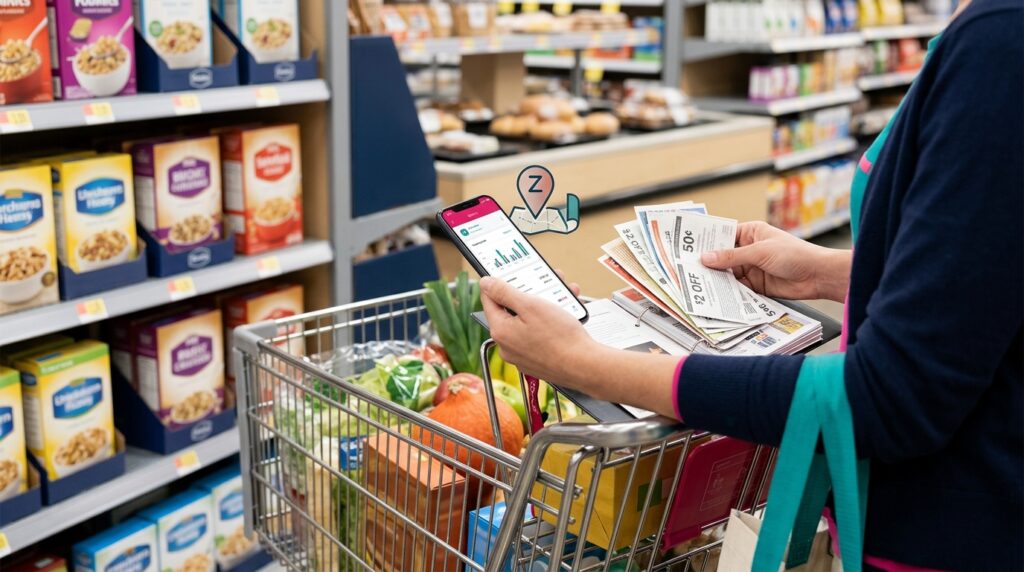
Couponing for beginners is no longer the binder-toting, Sunday-paper hobby it was a decade ago — in 2026, the average household saves 32% on groceries with nothing more than a phone, a free Walmart account, and 15 minutes a week. This Couponing 101 guide walks you through every type of coupon, the math behind stacking them, and the exact steps for your first $40-saved trip without becoming an “extreme couponer.” Pair it with our Walmart deals master guide for the broader playbook, our best cashback apps for Walmart roundup for the rebate stacking layer, and our Walmart hidden clearance deep dive for the in-store finds that pair beautifully with a digital coupon. By the end of this guide, you’ll know what’s worth your time, what’s a waste, and how to stop overpaying for the items already in your cart.
🔥 Today's Top Deals
All Deals →


What is couponing, really? (And why 2026 is the easiest era ever)
At its core, couponing is the practice of using printed or digital discount tokens to lower the price of items at checkout. The history is long — paper coupons have existed since 1887, when Coca-Cola handed out the first one for a free drink — but the modern era looks completely different. Sunday-paper inserts have shrunk by 78% since 2015, while digital coupon redemptions have grown 340%. The shift means everything you used to need scissors for now lives behind a single tap.
For a beginner, this is a gift. You don’t need a binder, you don’t need a printer, and you don’t need to spend Sunday mornings clipping. What you need is the right app, a basic understanding of how the three coupon types interact, and a 15-minute weekly habit. The math from there compounds — most beginners report saving $30-60 on their first real trip and $150-250 a month within 90 days.
💡 Pro tip: The single biggest mistake new couponers make is chasing a coupon for an item they wouldn’t have bought anyway. A 50%-off coupon on a $4 item you don’t need is a $2 loss, not a $2 win. Long-time members of r/coupons hammer this rule weekly.
The 3 types of coupons (and how they stack)
Stacking is the heart of effective couponing, and it only works once you can tell the three types apart. Most retailers — Walmart included — let you combine one of each type per item. That’s the entire game.
| Coupon type | Issued by | Avg savings | Where you find it |
|---|---|---|---|
| Manufacturer | The brand (Tide, Kellogg’s, Pampers) | 15-30% | Brand websites, Sunday inserts, app feeds |
| Store | The retailer (Walmart, Target) | 10-25% | Walmart app, store circulars, in-app weekly ads |
| Digital | Either the brand or store, delivered via app | 10-40% | Walmart’s digital coupons page, Ibotta, Coupons.com |
| Cashback rebate | Apps (technically not a coupon, but stackable) | 1-15% | Ibotta, Fetch, Rakuten, Receipt Hog |
The trick to maximum savings is layering: one manufacturer coupon + one store coupon + one digital offer + one cashback rebate per item. On a $5.99 box of cereal that becomes $5.99 − $1 (manufacturer) − $0.50 (store) − $1 (digital) − 5% rebate = $3.27. That’s a 45% savings without doing anything most cashiers haven’t seen before. Communities like r/povertyfinance have documented stacks pushing 70%+ on regular grocery hauls.
What “stacking” actually means at the register
Stacking is allowed when each coupon represents a different layer of the supply chain — manufacturer (covered by the brand), store (covered by the retailer), and digital (delivered by either, but tied to your account). What’s NOT allowed is two of the same type on one item. You can’t use two manufacturer coupons on the same box of cereal — Walmart’s POS system flags it instantly, and most stores have automated this since 2022.
Hand-picked grocery deals to test your first stack on
Grocery is the densest couponing category, especially for beginners. Pantry staples, breakfast cereals, snack multipacks, and personal care items are all routinely stackable. Start here — these are the items where a 3-coupon stack tends to push real money off your bill:
🆕 Recent Deals — Grocery

If a deal looks too good — say, a $0.99 final price on a $7 item — that’s the territory where people start chasing what’s known as a loss leader. Retailers price-cut these items below cost specifically to bring you in the door, expecting you’ll fill the rest of your basket. Don’t apologize for taking the deal — that’s exactly how the strategy works.
Manufacturer vs store vs digital: which to chase first
The honest answer for beginners: start with digital coupons inside the Walmart app. They’re already loaded, they require zero clipping, and they auto-apply at checkout. Once that habit is built, layer in cashback apps. Manufacturer paper coupons can come last, after the routine is automatic.
| Coupon source | Effort to use | Avg savings/trip | Best for |
|---|---|---|---|
| Walmart app digital | Low (1 tap) | $8-15 | Total beginners |
| Ibotta cashback | Low-medium | $5-12 | Phone-first shoppers |
| Fetch Rewards | Very low | $3-8 | People who already shop normally |
| Manufacturer paper coupons | Medium-high | $10-25 | Brand-loyal shoppers |
| Sunday newspaper inserts | Medium | $4-10 | Folks who already get a paper |
Ready to test your first 3-coupon stack?
Browse this week’s hand-verified deals under $10 — most pair with at least one app coupon for instant savings.
Your first couponing trip: a 7-step playbook
Forget the binder. The modern beginner’s first trip is a 30-minute exercise that nets $30-50 in savings if you follow the steps in order. Here’s the exact sequence:
Pick ONE store and ONE category
Don’t try to coupon at four stores on your first trip. Pick Walmart (highest digital coupon density) and pick groceries (highest yield). Master one combination before adding more.
Make a rough shopping list of items you’d buy anyway
This is the rule that prevents the “I saved $4 on something I didn’t need” trap. Write down 12-18 items you actually use weekly: cereal, pasta, snacks, laundry detergent, paper towels, dish soap.
Open the Walmart app and clip every digital coupon that matches
Inside the app, tap “Deals” then “Coupons.” Browse — most beginners find 4-8 coupons on their list within 5 minutes. Tap “clip” on each one. They auto-apply at checkout when the matching item scans.
Open Ibotta and unlock matching offers
Ibotta is a free cashback app — search the same items, tap “Add Offer” for each match. After your trip, you scan your receipt in the app and get cash back deposited within 48 hours. Average per-trip earn: $4-8.
Check Coupons.com for matching manufacturer paper coupons
Optional — only do this step if you have a printer. Print the 2-3 highest-value matches, fold them, and bring them along. Walmart accepts most manufacturer paper coupons on top of digital.
Shop the trip — but verify each item’s shelf price first
Some items will be cheaper without coupons (private label vs name brand with coupon). Compare unit prices on the shelf — a $3.50 generic can beat a $5 brand with a $1 coupon every time.
Pay, scan, repeat
Pay with the Walmart app’s Walmart Pay (digital coupons auto-apply). Open Ibotta in the parking lot and scan your receipt. Total time: 30-45 min for ~$30-50 saved on your first trip.
Beauty & personal care: the highest-yield non-grocery category
If you’ve nailed grocery couponing, beauty is the next frontier. Drugstore brands (e.l.f., Maybelline, L’Oreal, Wet n Wild) regularly issue $2-3 manufacturer coupons that stack on top of Walmart’s digital offers and Ibotta cashback. The compounding effect is dramatic: a $9.99 mascara can hit $4.99 with a digital coupon, then $3.49 after Ibotta cashback. That’s a 65% savings without setting foot in a Sephora.
🆕 Recent Deals — Beauty


Beauty is also the easiest category to spot loss-leader pricing in. Walmart’s beauty department uses competitive entry-price points to draw shoppers across from drugstore competitors. Pair this with our Walmart hidden clearance guide and you’ll routinely find clearance-priced beauty items that further stack with digital coupons — sometimes hitting 80%+ off MSRP.
Coupon stacking math: a worked example
Numbers make the savings click. Here’s a real-world stack on three pantry items, the kind a beginner runs in week one:
Across a 20-item shopping trip with this kind of stack on half the items, beginners typically pull 35-45% off the entire bill. That math is what turns “Couponing 101” from a hobby into a $2,000-$3,000 annual line-item win for most households.
💡 Pro tip: If you can’t find a digital coupon for a specific item, check whether it’s listed in Walmart’s 2026 price match policy — sometimes a competitor’s lower price counts as your “coupon” without ever clipping one.
Kitchen finds: the surprise category beginners overlook
Most couponing guides skip kitchen because the assumption is “you can’t coupon a frying pan.” That’s only half true. Kitchen storage, cleaning tools, food storage bags, foil, and small appliances absolutely have coupon coverage — particularly through brand sites (Glad, Ziploc, OXO) that issue $2-5 manufacturer coupons quarterly.
🆕 Recent Deals — Kitchen
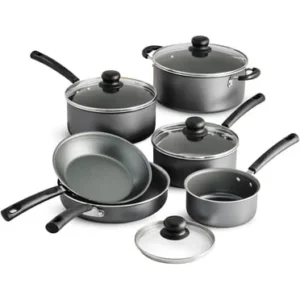
The kitchen aisle is also where Walmart’s r/Frugal favorites show up most — Mainstays cookware, Great Value food storage, and Better Homes & Gardens organizers all carry digital coupons during their seasonal promotional cycles.
Common mistakes that wreck beginner trips
- Chasing coupons instead of needs. The single most common failure mode. If a coupon doesn’t match something you’d buy anyway, walk past it.
- Stacking expired coupons. Digital coupons in apps disappear automatically, but printed manufacturer coupons need date checks. Walmart’s POS rejects them silently.
- Ignoring unit prices. A coupon makes a 32-oz bottle look cheap, but the 64-oz next to it might still beat it per ounce. Always check the small grey unit-price text.
- Buying 12 of an item just because it’s “free after coupon.” Most stores cap how many coupons of one type you can use per transaction (Walmart’s limit is 4 identical coupons per trip).
- Trying to extreme-coupon on day one. The TV-show version of couponing made famous in USA Today’s extreme couponing coverage showed people getting $700 of groceries for $9 — but those trips take 8+ hours of prep and only work with very specific store policies. Aim for sustainable 30-50% savings, not viral 99%-off hauls.
- Skipping cashback apps because they “feel like work.” A 30-second receipt scan after each trip = $200+ a year for most households. The hourly rate is excellent.
The cashback layer: how to add 8-12% on autopilot
Cashback apps aren’t technically coupons, but they stack on top of every coupon you use. Ibotta is the most popular for grocery and pairs perfectly with Walmart Pay. Fetch Rewards is the most passive — just scan every receipt and earn points redeemable for gift cards. Rakuten works for online Walmart.com orders.
The full layered approach looks like: digital coupon (in app) → store coupon (in app) → manufacturer paper coupon (at register) → cashback rebate (after the trip via app). For a complete walkthrough of which apps actually pay out and which are duds, see our best cashback apps for Walmart deep-dive.
Where to find printable coupons in 2026
Most paper coupon sources have shrunk dramatically, but a few are still worth your time:
- Coupons.com — biggest free printable archive, refreshes Mondays
- Brand websites directly — Tide, Kellogg’s, P&G all offer email-newsletter coupons worth $2-5 each
- Sunday newspaper inserts (RetailMeNot, RedPlum) — declining but still useful in larger metros
- SmartSource — the modernized digital version of paper inserts, also accepts saves to your local store account
- Brand loyalty programs — Pepsi Stuff, Coca-Cola Rewards, Kraft Heinz — these pay out 4-8x what random printables do
Avoid sketchy “coupon code” aggregator sites that promise 90%-off codes for retailers — most are stale, fake, or affiliate spam. Stick with brand-owned and store-owned sources.
What about extreme couponing? (And why it’s mostly impossible in 2026)
The era of extreme couponing peaked in 2010-2014. Since then, almost every major retailer (Walmart included) has tightened policies: no more “double couponing,” strict 4-coupon-per-transaction limits, and automated POS detection that flags multiple identical coupons per visit. The viral 95%-off cart videos still happen occasionally, but they require very specific store-level policies and hours of prep per trip.
The realistic 2026 ceiling for a regular shopper is 50-65% off a typical bill — and that’s still life-changing money over a year. Aim for that, not the $9 cart fantasy. Walmart’s corporate policy on coupons makes the modern limits clear: digital plus one paper per item, capped at 4 like-coupons per trip.
FAQ
Do I need to print coupons in 2026, or is digital enough?
Digital is enough for 90% of beginner trips. The Walmart app, Ibotta, and Fetch combined cover most pantry, beauty, and household needs. Only add paper coupons (via Coupons.com) once you’re comfortable and want to push savings past 50% per trip.
Will the cashier give me trouble for stacking coupons?
Almost never in-store in 2026. Digital coupons auto-apply through Walmart Pay — the cashier doesn’t even see them. Paper manufacturer coupons scan at the register and either work or don’t. If one’s rejected, just skip it; don’t argue. The system is automated, not a personal call.
Are coupon binders still worth it?
For 99% of beginners, no. Binders made sense when paper coupons were the dominant format. In 2026, your “binder” is the Walmart app and Ibotta. The exception: if you find a niche category (baby formula, specialty diet items) where paper manufacturer coupons run heavily, a small zip-pouch beats a binder.
How much can I realistically save in my first month?
Most readers report $80-150 in the first month with the digital-only approach (15 minutes a week, no paper coupons). After 3 months, when habits compound and you’ve added cashback apps, $200-350/month is typical. Year-one savings of $2,000-3,500 are well within reach for a household of 2-4.
Where can I find the best deals to stack coupons on?
Hand-verified deal feeds are your best bet — sites like ZipDealFinder pull live prices and surface the items currently in their lowest pricing window. Pair our deals under $10 filter with your digital coupon stack and you’re effectively shopping at the bottom of two pricing curves at once.
Browse other price tiers
Couponing pairs perfectly with our price-tier guides — start small, then scale up:
- Best Walmart deals under $5 — pantry, snacks, beauty starter coupons
- Walmart deals under $10 — the everyday-essentials sweet spot for stacking
- Walmart deals under $25 — gifts and bigger pantry hauls
Find a Deal at Any Budget
4 price tiers, hundreds of savings — tap to filter.
The bottom line
Couponing in 2026 is mostly a 15-minute weekly habit with a phone, not the binder-toting marathon it once was. Start with the Walmart app’s digital coupons, layer in Ibotta cashback, add paper manufacturer coupons only when you’re ready, and chase real grocery items you’d buy anyway — not viral hauls. Pair every trip with a hand-verified deal feed and you’ll easily hit 40-60% off your monthly grocery bill within 90 days. For your next move, dive into our complete Walmart deals master guide or jump straight to the live deals under $10 feed to put your first stack to work this weekend.